

Exploring architecture and multidisciplinary concepts at STRAND OA2026, fourteenth international Conference and Exhibition, On Architecture — Crosscutting, Exploring New Horizons, hosted by the Serbian Academy of Sciences and Arts and Gallery of Science and Technology in Belgrade, Serbia and featuring parallel events — thematic panels, original exhibits and related student exhibition, in Australia, South Korea and USA.
Details
— Conference & Panels
3–4 December 2026
Serbian Academy of Sciences and Arts, Belgrade, Serbia
Knez Mihailova 35, 11000 Belgrade, Serbia
— Exhibition & MicroMacro Awards
2–17 December 2026
Gallery of Science and Technology of the Serbian Academy of Sciences and Arts, Belgrade, Serbia
Đure Jakšića 2, 11000 Belgrade, Serbia
Call for Contributions
Call for Contributions is closed.
You are invited to become part of the programme and share your expertise, experiences and research. We look forward to receiving your proposals.
Conference and Panels
Contributions presented at the Conference and Panels will be published in blind peer-reviewed Conference Proceedings and Book of Abstracts and assigned with ISBN and DOI numbers.
Best papers will receive recommendation for publishing in the selected international scientific journals.
Exhibition and Awards
Contributions presented at the Exhibition will be published in Exhibition Book.
Best exhibition works will be considered for MicroMacro Awards.
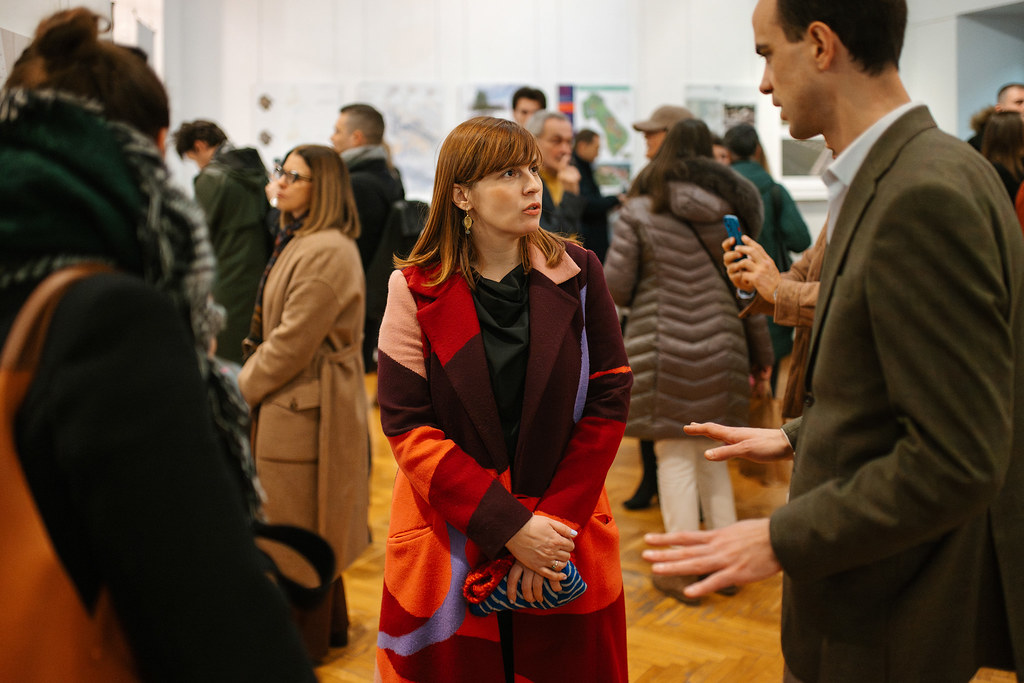
On Architecture 2025 Opening Ceremony
Selection Outcomes
CONFERENCE & PANELS
*Authors names are blinded for the duration of manuscript review process.
Spatial Identity: Foundation of the Asset Orchestration Framework for Construction Project Delivery
GLAMMONS Handbook: For the GLAMs of the Commons
Artificial Intelligence: Creator or Plagiarist
In Virtual Space – Mind Garden and Synthspa
New Formations, New Perceptions
Matter and Material Practice Contra Supermodernity
The ASD Initiative in Extreme Scarcity: A Post-War Design Case Study of the Gaza Strip
Designing the School of Tomorrow: Educational Architecture Between Pedagogy, Urban Transformation, and Social Care
Nothing Starts from Zero: On Fragmentation, Origin and AI in Architecture
A Design Framework for Connective Link Spaces in Socially Responsive Work and Community Environments – Focused on a Speculative Design Workshop –
New Frameworks of Interconnectedness: Objectology and Spatial Transformations through Things and Their Networks.
Architectures of Confinement: A Phenomenological Inquiry into Thresholds and Spatial Apparatuses of Control
Beyond the Façade: Architecture as Second Skin
Architecture Between Permanence and Temporality: Housing in the Age of Mobility
Regulating the School of Tomorrow: FUTURA guidelines, the 1975 Decree, and the Antonio Gramsci School in Vinovo
Architectural Education Between Physical Studio and Digital Space: New Methodological Horizons for Future Design Practice
Exploring Creativity: Controlled Integration of Generative AI in Architectural Visualization
The Architect as a Visual Artist: Transposing Architectural Language into Graphic Form
Housing: A Product, a Commodity and a Service, or an Idea of Coexistence with Nature?
Agon- Ἀγών, A Question on the Phenomenon of Urbanity
Scene Architecture of Everyday Life: Slang Toponyms and Performative Spaces of Novo Naselje
Open Yet Protected: The Glass Envelope as a Mediating Device in Richard Meier’s Ara Pacis Museum
Absence and Silence as a Generator of the Spatial Potential of Scene Architecture
Printable Intelligence: A Symbolic CAD Code Synthesis Paradigm for Topologically Valid, Adaptive Architectural Fabrication
Technosomatic Architecture: AI as Phenomenological Instrument for Measuring the Embodied Human in Built Space
The Concept of Excess: The Condition for New Materiality in The Automated Landscape
Designing Anxiety: Toward a Phenomenology of Sensory Overload in Contemporary Architecture
From Organization to Space: Methodological Frameworks and the Production of Architectural Form
Making Architectural Memory Visible Along the Colonnaded Street of the Ancient City of Side: A Discussion on the Possibilities and Limitations of AR Technology
What Computers will Never Be Able to Do
Sbtitle: Re-imagining design as a distinctly human capacity
Ground Lift and Architectural Manifestation: A Sectional Analysis of RCR Arquitectes’ Soulages Museum
Management of Interior Components as Secondary Resources in the Context of the Circular Economy
Emergency Department Architecture.
From Spatial Conflict to Adaptive Design in Emergency Healthcare Environments
Learning to See as AI Sees: A Generative AI Educational Platform for Architectural Design Pedagogy
Mini GenAI Lab: A Python-Based Educational Tool for Architecture Students
Algorithmic Arte – Crafts: Poetic Narratives in the Work of Pantelis Xagoraris
Modernization of recycled factory halls: Structural analysis, corrosion and fire protection
Form Follows Data: Sensor Technologies in Adaptive Furniture Design
Researching Ideology: Modernist Traces and Regimes of Representation in Yugoslav Modernism
Spatial Narratives of Fragmentary Heritage: Interpretation and Activation of Todorova Kula in Stalać
Beyond the Monument: Memorial Landscape and Everyday Urban Life in Šumarice Memorial Park
Rethinking Architectural Atmosphere: From Spatial-emotional Phenomenon to Algorithmic Mediation
The City As A Macro-School: Architectural Approaches to Learning In Public Space
In Search of A New Paradigm for Architectural Expertise
Low-resource healthcare, hyper-complexity and adaptive design… How might we collectively and strategically train the designers of tomorrow?
The Phenomenology of Place Attachment in the Dwelling and Inside-Outside Reflections
Theoretical Models of Industrial Cities of Modern Urbanism
Unarchiving Sava Center: The Politics of Detail in Modernist Reconstruction
Reweaving Architectural Knowledge: From Semper’s Textile Theory to Adaptive Material Technologies
Beyond Form: Transformation as an Adaptive Design Method in the Context of Artificial Intelligence
EXHIBITION & AWARDS
Nikola Andonov, Aleksandar Ristović, Stefan Stojanović, MADA Architecture studio
Kula Kosmaj
Joongho Lee
Vein of the Collective City
Ana Stanojević Brankov, Uroš Antić, Isidora Đorđević, Ljiljana Jevremović, Đurđina Rančić, Mila Penčić, Aleksandar Milojković
Cellar To Suite: Adaptive Living Space
Milena Markova-Metalkova, Alexander Mladenov, Samuel Brooks, Ana Stanojević Brankov, Boris Rančev, Antonela Karapandzheva, Musab Ak, Kremena Dimitrova, collaborators: Miomir Vasov, Georgi Georgiev, Gordana Rančev
Digital Silence: Documenting endangered vernacular heritage of Western Balkan mountain villages
Mojsilovic Mila, Jocic Nikola, Matkovic Mina, Ilic Kristina
Central University Library of the University of Podgorica, Montenegro
Bojana Sićović
The Architect as a Visual Artist: Transposing Architectural Language into Graphic Form
Phil Watson, Bryan Cantley, Joe Bausano, Danijela Mirkovic, Dragana Vasiljević Tomić
Nomachina
Đorđe Alfirević, Sanja Simonović Alfirević
Central University Library in Podgorica
Tijana Jovanović Petrović, Dragana Gagić, Tatjana Radaković, Nataša Čolić Marković, Nataša Danilović Hristić, Saša Stefanović, KidHub Educational Center, Institute of Architecture and Urban & Spatial Planning of Serbia
Children’s Manifesto for Sustainable Cities
Jelena Ruvidic
Contemporary Classics
Interior Design of a Private Apartment
Jelena Ruvidic
Living/Working with Contrast
Interior Design of a Private Apartment
Jelena Ruvidic
My Way
Interior Design of a Private Apartment
Jovana Subašić
Artificial Intelligence: Creator Or Plagiarist
Exhibition of Drawings and Computer-Generated Images
Bojana Pašajlić
Adaptation and Reconstruction of the Ground Gloor of the Faculty of Law, University of Kragujevac
Bojana Pašajlić
Children’s Park at The Memorial Park “Kragujevački oktobar”
Poturak Semir, Jelena Mitrović, Bojan Končarević, Matija Vračarić, Tara Stojiljković
Latent Structures
Aleksandra Milošević Pantović
Architecture Between Permanence and Temporality: Housing in the Age of Mobility
Aleksandra Pešterac, Dragana Vilotić, Slađana Milićević, Katarina Keti Zaharijev, Darko Sekulić
FTN Pavilion
Aleksandra Pešterac, Violeta Todorović and Darko Sekulić
Embowering Parasite
Monika Štiklica
A Gastro Bar: Urban Food Extension
Monika Štiklica
Micro Architectures of Family Life
A Residential Interior for Contemporary Urban Living in Belgrade
Maja Dragišič, Milan Božić, Milica Milosavljević, Spring Studio, collaborator: Tamara Koneska
Exhibition design “More Than a Game”
Predrag Milutinović, Mapa Architects
New Belgrade Tower (competition project)
Predrag Milutinović, Mapa Architects
One Wall (competition project)
Aleksandra Pešterac, Darko Sekulić
Kitchen Interior at the Science and Technology Park in Novi Sad
Relja Petrović
Fire, Air, Water, Earth: Exhibition and Catalogue Design
Attila Antal, Višnja Žugić
SPA:RE – Public Spaces ReClaimed
Vladimir Savić, Aleksandra Pešterac, Darko Sekulić
Reorganizing Administrative Space: Interior Design Proposal for the Pavle Beljanski Memorial Collection
Vladimir Savić, mentor: Radivoje Dinulović
A Performative Spatial Narrative Pilgrim
Tatjana Babić, Slađana Milićević, Dragana Vilotić, Aleksandra Pešterac, Darko Sekulić
EU Pavilion for 93rd International AGRIFAIR in Novi Sad 2026
Natalia Kliśko-Walczak
Buffer Sequenza | Passive Strategy for Reducing Heat Loss In Tall Interiors
Dragana Ćirić (unit [d])
“House S” Stair Construction and Design
Dragana Ćirić (unit [d])
Enhancements
Tatjana Babić, Dragana Kojičić, Jelena Janev, Sonja Petrović, Gordana Momčilović Ilić
LALA Earthland festival 3
Artistic event – procession through interactive ambient spatial interventions
Natalija Bogdanović, Aleksa Đurić (ADDICTED DESIGN STUDIO)
“Prendić Villa – New Perspective, New Duration”, Exhibition Design
Tanja Vujinovic
Mind Garden and Synthspa
Aleksa Bijelovic
Measure of a Stick
Folklorismus, Prop-objects, and Autodidactic Bodily Practices
Hyunsoo Kim
BEYOND DEBRIS: A Transitional Initiative for Post-War Gaza
Hyunsoo Kim (Jeju National University, South Korea)
Studio course presentation, books and image panels
Francesco Carota (University of Kansas, USA)
Designing the School of Tomorrow: Educational Architecture Between Pedagogy, Urban Transformation, and Social Care
Miloš Kostić
Unarchiving Sava Center: The Politics of Detail in Modernist Reconstruction
Davor Ereš, Students: Annastasia Kublashvili, Marianne Diagne, Venus Mbadou, Ines Moh, Rihab Rachad, Ginevra Neri, Eliakim Cyril Boni, Rhania Salmi, Bianca Tanasoiu, Amandine Fievet, Marion Kassab, Mia Zaidan, Israël Bello, Papa Abdoulaye Sow
Floating Paris Workshop – Architectural Workshop
Igor Rajković, Ivana Rakonjac, Ana Zorić, Vanja Spasenović, Sonja Dedić, Iva Lokas, Dalia Dukanac, Petar Cigić, Uroš Kulić
Context Research Workshop – Azuma House
Igor Rajković, Ana Zorić
Workshops Architect’s Strokes – One Decade
Ksenija Pantović, Jasna Kavran, designers: Anastasja Spalević, Milena Bandović Dimitrijević, Valentina Gojković, Sanja Opačić, Iva Pecović
The International Competition for the Conceptual Design of the Zabjelo Community Centre in Podgorica
Ksenija Pantović, Jasna Kavran, designer: Anastasja Spalević
The Swimming Pool Complex in Bela Crkva
Ksenija Pantović, Jasna Kavran, designer: Milena Bandović Dimitrijević
Bliss boutique at Galerija Belgrade
Ksenija Pantović, Jasna Kavran, designer: Sanja Opačić
Forestia Play Land
Dejan Todorović, collaborator: Aleksandar Popović (Karkatag)
v0: OSADAŠNjENjE / i0: PRESENTIFICATION
Snežana Zlatković, Dejan Todorović
One Day Studio: Genex Tower
Dejan Todorović, collaborator: Mila Pejčinović
LANA Pilates Reformer Studio
Snežana Vesnić, Vladan Đokić, Dejan Vasović, Ilija Đurović, project: Aleksa Bolpačić
Dance of the Sugar Plum Fairy: The Landscape of Automata
Snežana Vesnić, Andrej Jovanović
Dissolution of Ground
Vladimir Milenković
Methodology of the Project 1: Stranded Naves
Textbook
Milena Kordić, Isidora M. Nikolić
Đuro Daničić – Devotion to Language
Exhibition Design and Visual Identity
Milena Kordic, Marija Krsmanovic, coauthors: Miona Bradic, Nikolina Jovanovic
International Competition for the ZabJeIo Commtinity Centre in Podgorica; Montenegro
Conference and Exhibition — Crosscutting, Exploring New Horizons
Concept
On Architecture — Crosscutting, Exploring New Horizons is based on the concept of an interdisciplinary, international, multi-location conference, with three thematic panels and three related exhibitions.
Crosscutting, Exploring New Horizons builds on the concept of the previous conference Crosscutting and Fusion of Disciplines and focuses on the interaction of science, technology and art, with architecture in creating the future at different levels, from micro to macro scale, problem-thematic and spatial scope.
We are interested in raising questions through the topics of the conference. To answer how architecture can react to challenges in the future, we need to explore interdisciplinarity, collective intelligence and team work as the basis of our approach. Therefore within conference questions will be raised, that do not ask or seek definite answers.
Themes
Topics will be considered through various disciplinary perspectives, including new aesthetics and functionalism, globalization, methods and approaches to design, innovative materiality, technology and new media.
The themes of the conference and exhibition are the promotion of quality design on different scales, which improves the lives of residents and visitors, with attractive places to live. The creation of quality design is important for individual life in an architectural building as a micro-scale of importance – as well as for design on a wider macro-scale, which highlights the strengths and potential of the city for more attractive business, qualified workforce, attractiveness of students, tourist potential and events of wider significance. This is what makes an exciting, vibrant city that offers knowledge about new trends in art, architecture and urban design.
An interdisciplinary approach is key in defining the thematic blocks.
— Phenomenology of Architecture
— Philosophy of Architecture
— Science, Technology and Architecture
— New methodological approaches, new methodologies
— Architecture, Art and New Media
— AI vs or part of New methodological approaches
— Exhibition Presentations
Conference & Panels Submission
CONFERENCE
(international, peer-reviewed)
3–4 December 2026
Serbian Academy of Sciences and Arts, Belgrade, Serbia
Knez Mihailova 35, 11000 Belgrade, Serbia
Crosscutting, Exploring New Horizons builds on the concept of previous ON ARCHITECTURE conferences and focuses on the interaction of science, technology and arts, with architecture in creating the future at different levels from micro to macro scale, problematic – thematic and spatial coverage.
Types of contributions (Paper, Poster, Presentation)
Conference Paper is a manuscript that the author(s) submit for academic peer review. An accepted paper will be published in the conference proceedings. All authors of accepted papers are expected to present their work.
Conference Short Paper or Poster is a short manuscript that describes new or ongoing research results including Research Presentations, Grant Proposal Presentations and Thesis Presentations. The poster contribution will be published in the conference proceedings.
How to submit
Follow Guidelines on how to submit Abstract for Conference and Panels.
Panel 1 — New Formations, New Perceptions
PANEL
(international, peer-reviewed)
New Formations, New Perceptions
Matter and Material Practice Contra Supermodernity
The era of force-fed technology constructs loomed for a long time. Constantly rebranded, it has been seemingly escalating for years now, reintroducing itself as an ever-present, all-integrating novelty, diligently obfuscating material circumstances.
On the contrary, and in view of understanding matter as the sole objective occurrence, New Formations, New Perceptions embraces and explores varieties and forces of material forms, objects as cultural tools and instruments of practice. Arising from the consequences of the world-system, the instruments’ mechanisms and analogies of function are the basis of investigation — unique, hacked, appropriated, and crafted. The role of objects in cultural transformation and tradition-making is a driving factor of analysis.
Panel 2 — Adaptive Speculative Design
PANEL
(international, peer-reviewed)
Adaptive Speculative Design
This panel proposes Adaptive Speculative Design (ASD)—a new methodological framework situated at the intersection of architecture, technology, and society—as a universal approach to navigating the uncertainties of the future city. Moving beyond the critical provocation of traditional speculative design, which often asks “What if?” from an observer’s perspective, ASD challenges us to ask “What if I am…?” This shift toward subjective speculation allows architects to embody the context of the ‘other’—whether it be the environment, the material, or the marginalized community—to discover intrinsic strategies for building ‘resilient systems.’ A central focus is on International Joint Studios as a primary tool to validate and evolve this framework. We explore how architectural creativity and systemic logic adapt through collaborative education (Joint Concept and Semesters) to ensure human dignity and sustainable community recovery. The goal is to bridge the gap between speculative research and its practical application in the real world.
Panel 3 — Designing the School of Tomorrow
PANEL
(international, peer-reviewed)
Designing the School of Tomorrow:
Educational Architecture Between Pedagogy, Urban Transformation, and Social Care
Across the globe, schools are undergoing a profound transformation. No longer conceived as isolated, mono-functional buildings, educational spaces are increasingly called upon to operate as hybrid urban infrastructures, social condensers, and platforms for collective life. This panel explores how emerging models of education—shaped by inclusivity, diversity, technological disruption, and environmental urgency—are redefining the spatial, architectural, and urban logics of schools.
Starting from the premise that the learning environment itself has become a critical unit of social and urban production, the panel refl ects on how educational architecture can act as a catalyst for wellbeing, community making, and sustainable development, particularly within post-industrial, marginalized, and low-income urban contexts. Contributors will examine schools as thresholds: between public and private, institutional and civic, pedagogical and infrastructural, local needs and global educational paradigms.
By bringing together perspectives from architectural design, urban theory, pedagogy, and practice-based research, the panel aims to question the historical image of the school as a fi xed pedagogical container. Instead, it proposes schools as adaptive, inclusive, and environmentally responsive systems, capable of negotiating the tensions between globalized lifestyles and localized social fragilities.
Guest Speakers
Presenting Keynote Speakers and Guest Artists of the OA2026 International Conference ‘Crosscutting, Exploring New Horizons‘ – Milos Jovanovic (Singapore), Iva Čukić (Serbia), Jovana Subašić (Serbia), Tanja Vujinović (Slovenia), Aleksa Bijelovic (Australia), Hyunsoo Kim (South Korea) and Francesco Carota (USA).
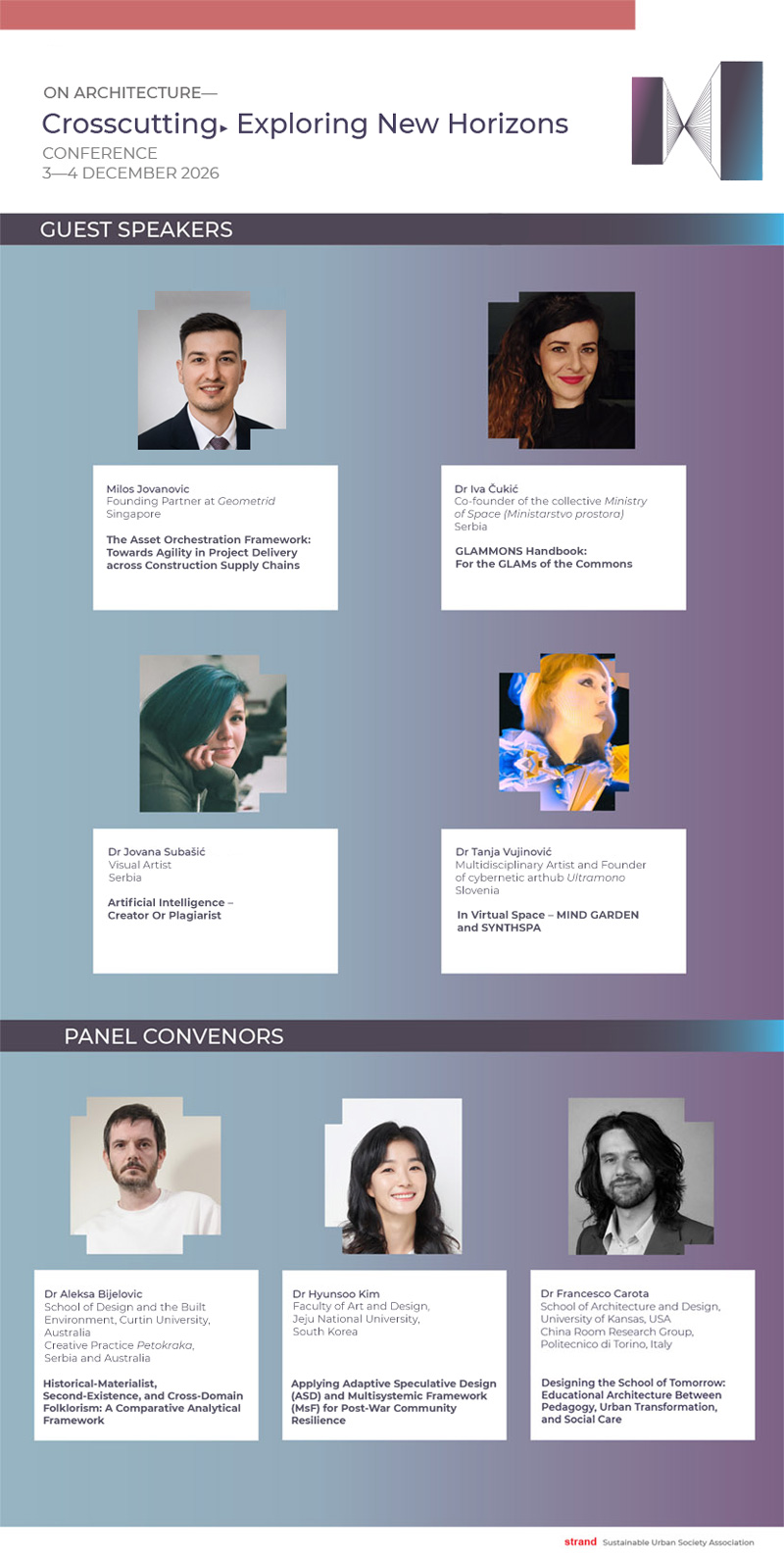
Milos Jovanovic
The Asset Orchestration Framework: Towards Agility in Project Delivery across Construction Supply Chains
Abstract: Construction project delivery involves transitioning individual building components, or assets, along their development stages, to their eventual handover. Conventional progress monitoring and reporting tends to obscure asset-level visibility especially in the stages where assets are managed in batches or parts prior to final jobsite activities. Applying the asset-centric view throughout the supply network, surfaces bottlenecks for early resolution in reference to specific assets, before they become costly escalations.
Iva Čukić
GLAMMONS Handbook: For the GLAMs of the Commons
Abstract: This paper presents the development of the GLAMMONS Handbook for the GLAMs of the Commons, one of the key outcomes of the Horizon Europe GLAMMONS project. The handbook was conceived as a practical and adaptable resource for galleries, libraries, archives, museums, and other cultural organizations interested in exploring commons-based approaches to cultural governance and production.

Jovana Subašić
Artificial Intelligence – Creator Or Plagiarist
Abstract: One of the defining factors of the new technological revolution is the emergence of so-called generative models (a form of artificial intelligence). The doctoral art project “Artificial Intelligence – creator or plagiarist“ examines the phenomenon of implementation of generative technologies in the field of art as a confrontation between human cognition and intelligent machine from theoretical, practical, and creative perspectives.
Tanja Vujinović
In Virtual Space – MIND GARDEN and SYNTHSPA
Abstract: The work extends from earlier virtual garden environments developed in AVANTGARDEN. MIND GARDEN consists of a virtual environment populated by synthetic plant forms, neural-like structures and floating spherical elements. The environment presents a continuous field of luminous vegetation and organic-looking formations.
Aleksa Bijelovic
Historical-Materialist, Second-Existence, and Cross-Domain Folklorism: A Comparative Analytical Framework
Abstract: Article proposes a comparative framework for folklorism across three traditions: Soviet historical-materialist accounts of functional transformation, West German theories of second existence and authenticity, and Hungarian analyses of movement between folklore and non-folklore domains. Their premises and explanatory priorities are made analytically commensurable, retaining their differences.

Hyunsoo Kim
Applying Adaptive Speculative Design (ASD) and Multisystemic Framework (MsF) for Post-War Community Resilience: A Mid-to-Long-Term Settlement Master Plan for the Gaza Strip
Abstract: Following the Hamas-Israel war, the Gaza Strip faces extreme conditions characterized by severe geopolitical isolation and acute resource shortages. While most residents endure prolonged stays in temporary shelters, permanent reconstruction progresses at an exceedingly slow pace due to ongoing blockades and destruction. Furthermore, restricted physical access and the absence of on-site data present substantial challenges for designers attempting systematic urban planning or architectural design. This study focuses on a mid-to-long-term settlement system as a transitional space between temporary relief and permanent housing.
Exhibition Submission
EXHIBITION & MicroMacro Awards
(international, juried)
2–17 December 2026
Gallery of Science and Technology of the Serbian Academy of Sciences and Arts, Belgrade, Serbia
Đure Jakšića 2, 11000 Belgrade, Serbia
Established in 2016, the MicroMacro awards are dedicated to the recognition of design solutions in innovative ways that successfully implement new standards in architecture and urban design and planning and encourage environmental sustainability.
Naming of the MicroMacro awards refers to various scales of recognized projects and programs – from micro as furniture and object design, urban design, exhibition design, and interior architecture to macro as public art, urban planning, architecture, building information modeling and software architecture.
How to submit
Follow Exhibition Guidelines on how to prepare and submit Poster.
Other formats and media are welcome to be exhibited – such as original artwork or drawings, digital copies of artwork, photo prints, models, prototypes, books, installations, video, audio or performance.
Who can enter
The competition is open to individuals and organizations in the fields of architecture, urban planning, design, history, technology, art, photography, new media art and to all geographical locations.
Who can submit a nomination
If you are an organization, an association, a not-for-profit or an individual you can nominate. You can self-nominate or nominate another organization.
We kindly invite the perspective architects, town planners and artist to submit their projects, drawings, and photographs that respond to the scope of the above listed topics.
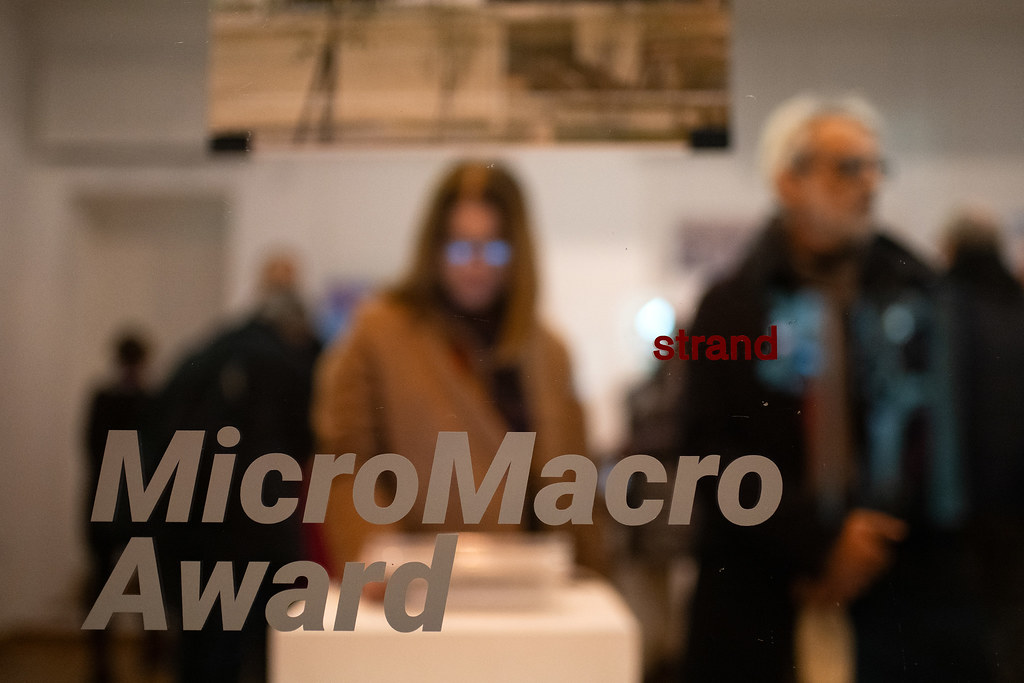
On Architecture 2025 Opening Ceremony
Exhibition Jury
MicroMacro Awards JURY
Presenting Jury Members of the OA2026 International Exhibition ‘Crosscutting, Exploring Horizons‘ with MicroMacro Awards Jury Members in alphabetical order Fancesco Carota (Italy/ USA), Senka Ibrišimbegović (Bosnia and Herzegovina), Ivan Šuković (Montenegro/ Serbia) and Simona Žemaitytė (Lithuania) – all previous winners of MicroMacro Awards series.

Francesco Carota
Architect
Francesco Carota’s research, teaching and professional work focuses on the design and understanding of the intertwined relations that weave architecture and urban development process together. He published a variety of academic articles, and he coedited the volume China Goes Urban. The City to Come for Skira Editore. In addition to academic publishing, he dedicated a great deal of effort to disseminating research and architectural culture to the broader public. He was scientific director of an exhibition on Chinese architecture and urbanization held at the MAO, Museum of Oriental Art in Turin, Italy, and co-curator of the Italian Pavilion at the Shenzhen Design Week – 2018 Edition. Francesco Carota is currently an Assistant Professor at the School of Architecture and Design, University of Kansas, and Affiliate Researcher at the China Room research group, Polytechnic University of Turin. Other than carrying on academic activities, he works as a licensed architect, and he is the cofounder of the architecture and design firm Calibro Zero. His work and voice as a curator and designer appeared in different media sources, and among the many the Italian magazine Domus, the Singapore based title d+a Design and Architecture, the fashion magazine Vogue and the architecture platform Archdaily.
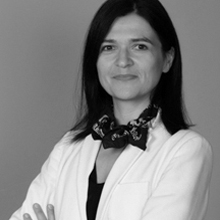
Senka Ibrišimbegović
Architect
Senka Ibrišimbegović completed her postgraduate studies in Italy in collaboration with Università di Siena, Politecnico di Milano, IUAV di Venezia, Università di Roma – La Sapienza. In 2004 Senka began her engagement at the Ars Aevi Museum of Contemporary Art in Sarajevo, working on the architectural project designed by renowned Italian architect Renzo Piano, as well as on exhibition setups, such as the 53rd Venice Biennale in 2009 and the 58th Venice Biennale as the commissioner of the Bosnia and Herzegovina pavilion. Since January 2008, she has been working at the Faculty of Architecture, and from 2024, she is an associate professor at the Department of Architectural Design. She has participated in numerous international scientific and professional conferences, symposiums, and scientific and professional projects. In addition to her academic career, as the director of the Public Institution “City Museums” Sarajevo, she is dedicated to promoting and working in museums as cultural institutions in Sarajevo, with a focus on the construction of the Ars Aevi Museum of Contemporary Art in Sarajevo.

Ivan Šuković
Artist
Ivan Šuković is a visual artist whose interdisciplinary practice unfolds at the intersection of multimedia art, archival research, and research methodologies drawn from scientific disciplines. His work explores the relationships between art, science, and architecture, employing processes of mapping, classification, and spatial analysis, with a particular focus on topography, taxonomy, and speculative narratives. He obtained his PhD from the University of Arts in Belgrade, Department of Multimedia Art (2019). His theoretical and methodological background is rooted in a research-based approach where artistic processes intertwine with scientific experiments and interdisciplinary inquiry. Šuković represented Montenegro at the 59th International Art Exhibition – Venice Biennale in 2022, as well as at the 19th International Architecture Exhibition – Montenegro Pavilion at the Venice Biennale in 2025. His work has been featured in numerous solo and group exhibitions across Europe. He has participated in international residency and art programs in Spain, Germany, Norway, and Italy. Ivan Šuković’s works are held in both public museum and private collections. Alongside his artistic practice, he is active in the fields of education and mentorship, with a particular interest in interdisciplinary learning models and art conceived as a research framework.

Simona Žemaitytė
Artist
Simona Žemaitytė is a Lithuanian artist-filmmaker. Her work was previously awarded at 15th Tallinn Print Triennial and nominated at Sheffield Doc Fest. Her works were exhibited internationally, including the National Gallery of Art, Vilnius; Loop Barcelona; Oberhausen Film Festival, 13th Kaunas Biennial; CSW Torune, Centrala Birmingham, Kasa Gallery Istanbul; Galata Perform Istanbul; BAFTA, RichMix, London, CAC – Contemporary Art Centre, Vilnius. She holds a practice-based Ph.D. from Vilnius Academy of Arts, where she currently teaches at the Sculpture Department.
Student Exhibition — Designing the School of Tomorrow
STUDENT EXHIBITION
(undergraduate students)
In parallel with the panel Designing the School of Tomorrow: Educational Architecture Between Pedagogy, Urban Transformation, and Social Care, a related exhibition will present selected projects developed within a design studio conducted in 2026 at the University of Kansas. The exhibition will showcase student proposals for a new middle school in Turin, Italy, exploring the school as a hybrid architectural and urban threshold embedded within a complex social and spatial context. Through drawings, models, and visual narratives, the exhibited works will reflect on how educational architecture can mediate between pedagogy, community life, and urban regeneration, translating critical research questions into spatial and architectural propositions.
Coordinator
Dr Francesco Carota, School of Architecture and Design, University of Kansas, USA
Registration and Fees
The Organizer offers the following conditions for participation where each fee is valid per manuscript or exhibition work.
Conference and Panels
— Fee for registration and payment until 15 July 2026
For 1 Conference Paper 220 EUR, for Conference Paper by doctoral student (required proof of study and/or age) 170 EUR, for 1 Conference Poster 170 EUR.
— Fee for registration and payment until 15 September 2026
For 1 Conference Paper 270 EUR, for Conference Paper by doctoral student (required proof of study and/or age) 200 EUR, for 1 Conference Poster 200 EUR.
— Fee for registration and payment until 15 October 2026
For 1 Conference Paper 350 EUR.
Fee include conference participation, conference materials Book of Abstracts and Proceedings, entrance to all conference sessions with coffee breaks and invitation to Opening and Awards Ceremony.
Exhibition and Awards
— Exhibition Posters
Fee for registration and payment until 15 September 2026
For 1 Exhibition Poster 100 EUR, for 2 Exhibition Posters of the same work 150 EUR.
Fee include exhibition participation, Exhibition Book, printing of posters with delivery to the Gallery and invitation to Opening and Awards Ceremony.
— Exhibition Work (other media)
Fee for registration and payment until 15 September 2026
For 1 Exhibition work 75 EUR.
Fee include exhibition participation, Exhibition Book, and invitation to Opening and Awards Ceremony.
All Conference and Panel Sessions as well as Exhibition related events are open and free for all interested public. Please note the conference room is of limited capacity therefore listeners are encouraged to reserve their seat via email info@strand. rs.
Key Dates
10 February 2026
— First Call for contributions
30 May 2026
— Conference Abstract Submission (250-300 words)
— Exhibition Application Submission (illustration and brief description 70-100 words)
15 June 2026 (extended deadline)
— Conference Abstract Submission (250-300 words)
— Exhibition Application Submission (illustration and brief description 70-100 words)
28 June 2026
— Selection Outcomes
16 September 2026
— Conference Manuscript Submission (for peer review)
— Exhibition Submission (for jury review)
Provisional Program
2 December 2025, Wednesday, 6 pm — 8 pm CET
Conference and Exhibition Opening with MicroMacro Awards Ceremony
Gallery of Science and Technology of the Serbian Academy of Sciences and Arts, Belgrade, Serbia
Đure Jakšića 2, 11000 Belgrade, Serbia
3 December 2026, Thursday, 9.30 am — 6 pm CET
Conference Day 1
Serbian Academy of Sciences and Arts, Belgrade, Serbia
Knez Mihailova 35, 11000 Belgrade, Serbia (First floor, Room 103)
Detailed schedule to be announced 1 month prior to event.
4 December 2026, Friday, 9.30 am — 6 pm CET
Conference Day 2
Serbian Academy of Sciences and Arts, Belgrade, Serbia
Knez Mihailova 35, 11000 Belgrade, Serbia (First floor, Room 103)
Detailed schedule to be announced 1 month prior to event.
17 December 2025, Wednesday, 8 pm CET
Exhibition Closing
Gallery of Science and Technology of the Serbian Academy of Sciences and Arts, Belgrade, Serbia
Đure Jakšića 2, 11000 Belgrade, Serbia
Conference Scientific Committee
Professor Branislav Mitrović, Faculty of Architecture, University of Belgrade, Serbia
Professor Rachel Armstrong, KU Leuven, Belgium
Professor Vladan Đokić, Faculty of Architecture, University of Belgrade, Serbia
Professor Ružica Bogdanović, STRAND & University of Belgrade, Serbia
Professor Aleksandra Stupar, Faculty of Architecture, University of Belgrade, Serbia
Professor Figen Beyhan, Faculty of Architecture, Gazi University, Turkiye
Profesor Pavlos Lefas, University of Patras, Greece
Dr Anastasios Tellios, Assistant Professor, School of Architecture, Aristotle University of Thessaloniki, Greece
Dr Aleksa Bijelovic, Senior Lecturer, School of Design and the Built Environment, Curtin University, Australia
Dr Nora Lefa, Associate Professor, School of Fine Arts, University of Ioannina, Greece
Dr Senka Ibrišimbegović, Associate Professor, Faculty of Architecture, University of Sarajevo, Bosnia and Herzegovina
Dr Nermina Zagora, Associate Professor, Faculty of Architecture, University of Sarajevo, Bosnia and Herzegovina
Dr Marija Mano Velevska, Associate Professor, Faculty of Architecture, Skopje, North Macedonia
Dr Vera Parlac, Associate Professor, New Jersey Institute of Technology, USA
Dr Nataša Danilović Hristić, Senior Research Associate, Institute of Architecture and Urban & Spatial Planning of Serbia (IAUS), Serbia
Dr Christiane Wagner, Affiliate Researcher at the Institute for Cultural Inquiry Berlin (ICI Berlin), Germany
Dr Denis Ambruš, Assistant Professor, Faculty of Civil Engineering, University of Rijeka, Croatia
Dr Francesco Carota, Assistant Professor, School of Architecture and Design, University of Kansas, and Affiliate Researcher at the China Room research group, Politecnico di Torino Italy
Dr Mateja Kurir Borovčić, Senior Researcher and Associate Professor, Urban Planning Institute of the Republic of Slovenia, Slovenia
Dr Ahmed Emam, Architecture of Today, Egypt
Dr Hyunsoo Kim, Assistant Professor, Jeju National University, South Korea
Dr Abdurrahman Mohammed, Associate Professor, Antalya Bilim University, Turkiye
Organizing Committee
Organization and Realization
STRAND – Sustainable Urban Society Association, Serbia
Partners
Serbian Academy of Sciences and Arts, Serbia
Gallery of Science and Technology of the Serbian Academy of Sciences and Arts, Serbia
People
Conference and Exhibition Concept
Professor Dr Ružica Bogdanović (Serbia)
ruzica.bogdanovic@strand.rs
Panel Concept and International Contact
Dr Aleksa Bijelovic (Australia)
Dr Hyunsoo Kim (South Korea)
Dr Francesco Carota (USA, Italy)
International Coordination
Professor Dr Aleksandra Stupar (Serbia)
Dr Nora Lefa (Greece)
Conference Coordinator
Aleksandra Pantović Milošević (Serbia)
Project Officer
Milan Maksimović (Spain)
Andjela Stojmirov (Serbia)
info@strand.rs
Venue
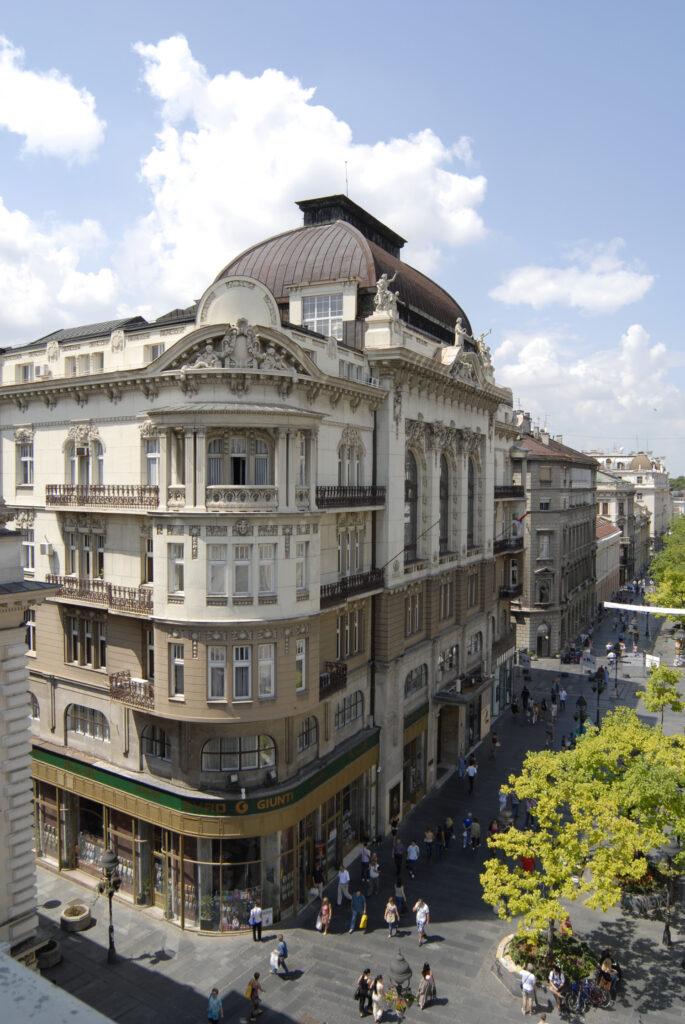
OA2026 — Conference, Panels, Exhibitions and Awards, would be hosted by the Serbian Academy and Sciences and Arts at historical venue in the central pedestrian district of the City of Belgrade.
Conference and Panels
3–4 December 2026
Serbian Academy of Sciences and Arts
Knez Mihailova 35, 11000 Belgrade, Serbia
Exhibition and Awards
2–17 December 2026
Gallery of Science and Technology of the Serbian Academy of Science and Arts
Đure Jakšića 2, 11000 Belgrade, Serbia
Learn more about the host and venue at www.sanu.ac.rs
Frequently Asked Questions
Accommodation Recommendation?
Hotel Palace
Topličin Venac 23, 11000 Belgrade, Serbia
Hotel Palace, situated just 300 meters from the venue, with its longstanding tradition and excellent customer service is offering affordable accommodation options including breakfast.
Visa Information?
Participants that need an entry visa are encouraged to arrange their travel in cooperation with the specialized travel agencies. Learn more about travel to Serbia here www.mfa.gov.rs
Conference and/or Exhibition Attendance?
All Conference and Exhibition Sessions are free and open to interested public. Due to limited capacity of the conference room kindly reserve your seat by sending an email with your name and date/time of attendance to info@strand.rs
Please note the registration fees apply only to authors that are taking part in the Conference and Exhibition programme.